
The meal-recall effect isn’t easy to implement. Widely studied in the 2000s, this cognitive memory trick—where remembering a recent meal can reduce your next snack intake—takes self-discipline and, more importantly, time. If you’re like me and lunch is a grab-and-go sandwich while responding to emails, you probably don’t have much of either. You’re in survival mode. That’s the context in which Amazfit introduced the Amazfit V1TAL at CES 2026—it’s a concept product that’s basically an AI camera that watches you eat.
Related: UREVO at CES 2026: building a smarter wellness lifestyle
How the Amazfit V1TAL works
Eating in front of an AI camera might sound off-putting, but Amazfit positions the V1TAL as a concept product that explores how nutrition could become a measurable input. Shaped like an old-school GoPro, the camera can sit on a table and record eating sessions in real time.
From the footage it collects, V1TAL can identify foods and estimate your intake of carbs, proteins, and fats—for every meal. For me, this means I can no longer pretend that a cheeseburger and a mountain of fries isn’t a caloric overload. And if I do indulge, perhaps the camera can show me where to cut back later.
The camera also observes eating patterns—when you eat and in what context. So, if you skipped lunch and stop for a bakery brownie on your way home from work, that can be noted. Perhaps, later, your wearables could offer easy suggestions for changing such habits.
Where this food camera fits in Amazfit’s ecosystem
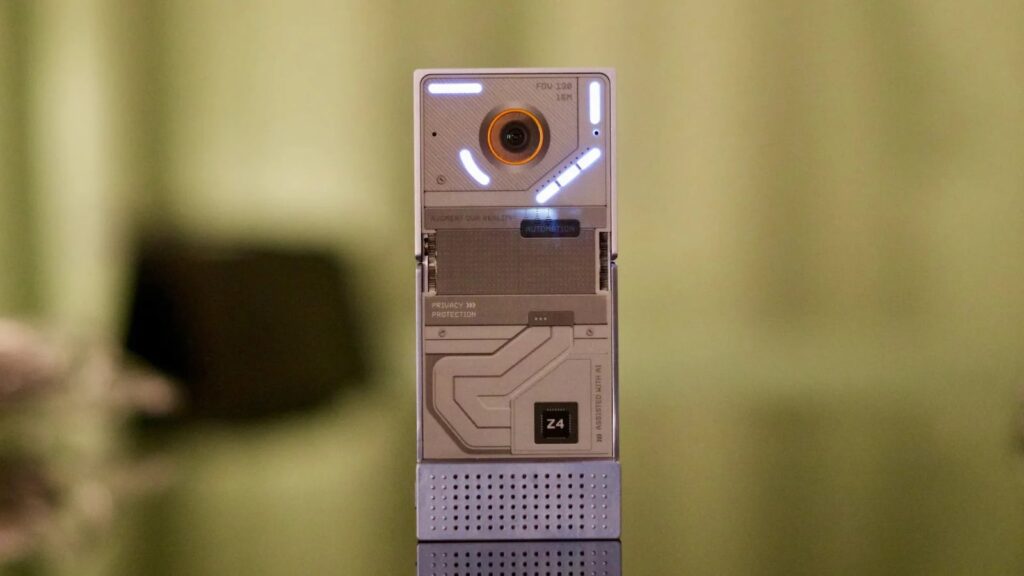
The Amazfit V1TAL isn’t a standalone product. The brand frames it as part of a broader, ecosystem-first approach. This means the food-tracking camera sends your eating data to the Amazfit Zepp App. There, you can see your nutrition data alongside training load, recovery, and other health metrics already tracked by Amazfit wearables.
V1TAL, in essence, tests what happens when food tracking becomes more automated—and more tightly connected—to the rest of a person’s health data. Will users eat more mindfully and report better results when meal-tracking is automatic, rather than a separate task they have to remember to do? Amazfit is betting the answer is “yes.”
Why a food-tracking camera might be useful
Amazfit V1TAL takes a cue from elite athletes’ eating habits—fueling mindfully, or meal recall. A serious athlete (along with their team of trainers and nutritionists) thinks about every bite. They check off their nutrition requirements and avoid certain food habits (for the most part) because it’s their job.
We aren’t all athletes, though, and we don’t all have a team of health experts checking in and encouraging us to eat better. When I’m stressed, the first thing I reach for is a bag of cookies, not the healthier veggie-and-hummus cup—and I know I’m not alone.
The Amazift V1TAL food camera hopes to change that. Healthier eating habits exist. Amazfit, with this concept product, might just make them easier to stick to.
Lauren has been writing and editing since 2008. She loves working with text and helping writers find their voice. When she’s not typing away at her computer, she cooks and travels with her husband and two daughters.