
If you use an iPhone and want to track your gear, Apple’s AirTag sits at the top. I put it ahead of the Tile and the Galaxy SmartTag2 for item find power. While the AirTag excels in many ways, the arrow guide can feel weak at close range, and it sometimes fails when tracking across different floors. Likewise, the beep button only produces two quiet tones, which can be hard to hear when the tracker hides in a wallet or backpack. Now that a new AirTag has entered the scene, you may be wondering who wins in my AirTag 2 vs. AirTag 1 showdown.
Design
The new AirTag’s external design is unchanged, so it remains compatible with accessories made for the original model, like the Belkin Secure Holder or Spigen’s Valentinus.
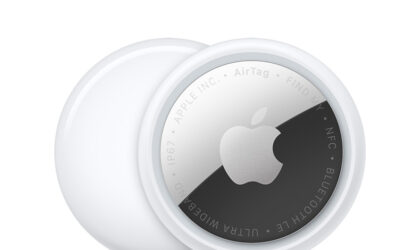
Apple AirTag (2nd generation)
With a louder speaker and extended Precision Finding range, the new AirTag makes tracking easier than ever.
Both the AirTag 2 and the AirTag 1 share the same glossy white plastic front and metal back, giving them a look and feel similar to a pin-back button you might attach to a jean jacket. In many places—especially crowded bars in New York—your jacket ends up in a pile or on a hook where someone else might move it. At least with the AirTag, you can still track it down, and do it in style.
Range
Compared with rival trackers, the original AirTag has a shorter Bluetooth range. Apple doesn’t publish official figures, but many users report that it maintains a connection to an iPhone for about 30 feet. This limitation stands out as one of the biggest drawbacks of the first-generation model. The AirTag 2 targets that weakness.
Apple says the new tracker can locate lost items from up to 50% farther away, thanks to an upgraded Bluetooth chip. At the center of the update is Apple’s second-generation Ultra Wideband chip, which also appears in the iPhone 17 lineup, iPhone Air, Apple Watch Ultra 3, and Apple Watch Series 11. With haptic, visual, and audio cues, Precision Finding guides you to your items from greater distances.
The Cupertino company also extends Precision Finding beyond the iPhone. For the first time, you can find an AirTag using Apple Watch Series 9 or later, as well as Apple Watch Ultra 2 or later, bringing item tracking to your wrist.
Volume
When it comes to the first-generation AirTag’s volume, opinions tend to split. Some people say they’ve never had trouble using sound to find their items and even prefer that the AirTag isn’t loud. A softer tone also makes sense when you’re searching late at night and don’t want to wake the house.
Others aren’t as satisfied. They find the AirTag’s sound too quiet and difficult to track. The alert starts soft, rises in volume, then fades again, which makes it harder to pinpoint your keys by sound alone. If that matches your experience, the AirTag 2 is the better fit.
With an updated internal design, the new AirTag is 50% louder than the previous generation, letting you hear it from up to twice the distance. In my view, the original AirTag works well when it’s somewhere nearby in the same room. But if it’s buried under clothes or tucked deep in a bag, the sound may not cut through—exactly where AirTag 2’s louder speaker helps.
Network size and privacy
Most Bluetooth trackers tap nearby phones that run the same app, which helps search for missing items without alerts or identity leaks. As more people join a platform, recovery odds rise. Because of this reach, Apple runs Find My as a shared network of Apple devices. Each device uses Bluetooth to spot an accessory or device and sends a rough location to the owner.
Along with map views in the Find My app, Apple adds fresh AirTag 2 support through iOS with a sharing option. This change builds on how people use AirTags in luggage. Now airlines can help when a bag goes missing or faces delay. Apple works with over 50 airlines that accept Share Item Location links, which keeps personal data safe.
Access goes to staff who pass Apple Account or partner checks, which keeps control tight. Sharing stops once the owner gets the item back, and the owner can end access at any time. If no action happens, the link ends after seven days, which adds peace of mind.
Verdict: AirTag 2 vs. AirTag 1
After weighing everything, I see the AirTag 2 as a refinement rather than a reinvention. It fixes two of my biggest frustrations with the original—limited range and a too-quiet speaker—while keeping the same design and deep Find My integration I already appreciate. The stronger Precision Finding and louder alerts make a difference when an item is genuinely lost, not just somewhere nearby. That said, the original AirTag still holds up well if you’re happy with its range and sound.
If you want the second-generation AirTag, you can get it for the same price as the first and buy a four-pack for just $99.
Grigor Baklajyan is a copywriter covering technology at Gadget Flow. His contributions include product reviews, buying guides, how-to articles, and more.