
Home robots are leveling up, and CES 2026 showed amazing prototypes. In Las Vegas, some robots worked on their own instead of following preset routines or being controlled from afar—no “long leash” here, Tesla’s Optimus! Robots folded laundry, poured coffee, but one stood out. Ollobot’s OLLO wasn’t just about doing chores; it focused on spreading good vibes and, if you’re open to it, becoming part of your family.
The other day, I wrote about Tombot and its robot puppy, Jennie, which aims to boost quality of life for older people. Now, OLLO, a quirky, alien-like robot, is ready pick up your routines and capture key moments on its own—no commands needed.
Design
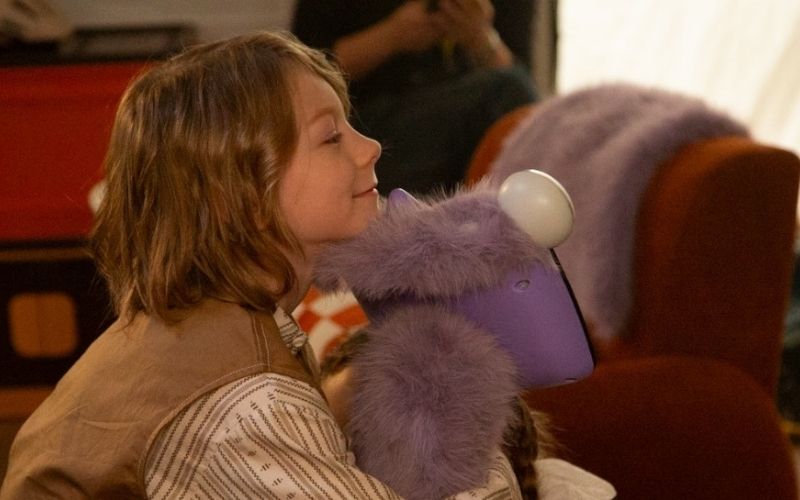
OLLO comes in two versions—OlloNi S1 (650 × 434 × 343 mm) with a short neck and OlloNi L1 (1200–660 × 434 × 343 mm) with a long neck. Each one feels like a fuzzy cyber pet with real charm. Both have fur, and the S1 can stretch his neck to hunt for your keys or play giraffe. I see the L1 as a Scrat twin from Ice Age. On top of that, OLLO develops a personality over time, which adds extra charm (more on that below).
Pick the L1 or the S1 and you get a small cyber pet that rolls on wheels, not legs. It rolls on wheels instead of legs. That detail feels like the main catch for me. I miss legs, since they could add more fun and boost the Scrat vibe.
Features
LG brought a humanoid robot on wheels to the floor with CLOiD, a machine that can make breakfast. But at CES 2026, I found myself drawn to ideas that felt stranger. OLLO pulled me in because it doesn’t behave like an appliance at all. Instead, it acts more like a pet, aiming for emotional connection through eye contact and playful sounds rather than task lists.
That emotional focus shapes how OLLO communicates. Rather than relying on full sentences, it expresses itself through body language—small neck movements, subtle facial cues, and a nonverbal sound set. Speech appears only when a moment truly calls for it, a choice that keeps the experience far from that of a talking appliance. OLLO also reads voice tone, motion, and interaction patterns to sense mood and energy, then shifts its behavior to match. It may stay close and move slowly, or burst with excitement when the moment feels right.
Memory is what gives OLLO its spark. The robot identifies moments it considers high value—birthdays, group gatherings, and big wins—and begins capturing photos and video on its own. I enjoy the lack of manual control, since the best shots often come from chance. Over time, OLLO recognizes each family member, picks up on habits, and develops a personality.
Inside, OLLO runs as a self-contained AI computer with cameras, microphones, and built-in memory. That memory is embodied as a “heart” beneath its soft, furry wings, placing privacy front and center at a moment when many AI products depend on the cloud. If the robot’s body breaks, the family cyber-pet keeps its past. A new body can inherit the old heart and carry on.
Price and availability
From what multiple sources say, OLLO should cost $1,200 to $2,000 based on size, with accessories and outfits bringing in extra revenue. An international Kickstarter campaign might pop up around summer.
Before you go
CES 2026 made it clear that home robots are no longer just about efficiency—they’re starting to explore emotion, presence, and companionship. OLLO isn’t trying to replace your routines so much as slip into them, learning who you are and how your days unfold.
I can see myself warming up to a robot like OLLO, not because of what it does, but because of how it makes you feel when it’s around. If you’re open to that kind of relationship, OLLO suggests a future where robots aren’t tools you command, but characters you live with. And that shift may be the strangest—and most interesting—upgrade of all.
Grigor Baklajyan is a copywriter covering technology at Gadget Flow. His contributions include product reviews, buying guides, how-to articles, and more.