
From January 6–9 in Las Vegas, the AI buzz runs at full throttle. The Consumer Electronics Show (CES) features both products ready to buy and concept gadgets that may or may not reach stores—and some could feel rough if they do. Here’s a look at the AI gadget trends to watch at CES 2026.
AI-powered robots
Brands at CES want to test how people react to AI-powered robots. Picture a robot with a human feel and skills. It offers care, talks with ease, and helps with baths, toilet trips, and clothes. It tackles dishes, runs a vacuum, and makes simple meals.
Now zoom out. CES 2026 will have some home robots on display. The spotlight, though, still falls on factory floors, supply hubs, and food counters.
Humanoid concept: LG CLOiD

LG plans to show its new home robot, CLOiD. A humanoid robot, it aims to handle chores around the house. LG keeps quiet on a full task list, but a few key ideas shine through.
A chipset sits inside the head and serves as the robot’s brain. The design pairs that chip with a display, a speaker, a camera, and a group of sensors. These parts help CLOiD hold expressive chats, manage voice talk, and move through rooms with care.
Emotional support animal: Tombot Jennie

I don’t usually get excited about robots taking the place of human emotional support—even dog-shaped ones (and I have a yellow Labrador I love). But Tombot’s Jennie the Labrador puppy grabbed my attention.
Tombot, a California startup, builds products for older adults and people with dementia. Their Jennie has touch sensors all over her body and responds to voice commands, offering comfort and companionship. The numbers make sense too—about a third of seniors in the US say they feel lonely, so Jennie could make a difference. Still, I think real human connection should come first, but that’s a discussion for another day.
VenHub Smart Stores
“We’re not coming to show slides or talk theory. We’re bringing a live, fully functioning Smart Store that people can use, touch, and experience for themselves,” says VenHub Global CEO Shahan Ohanessian.
VenHub Smart Stores mix robotics, automation, and mobile checkout to create a smooth, self-service shopping experience. They run 24/7 with no staff on-site, giving people easy access to everyday items.
Inside, a couple of robotic arms grab products from shelves and place them on platforms. From there, the items drop into compartments where customers can pick them up. Shoppers use the VenHub app to order and pay.
Robotics and self-driving compute: NVIDIA
NVIDIA CEO Jensen Huang gave a two-hour keynote at GTC DC last October, where he said the current Grace Blackwell and upcoming Vera Rubin GPU platforms will cut AI costs. Now at CES 2026, NVIDIA pushes to become the top choice for robotics and self-driving compute. The AI models and chipsets in the works already show the direction, so I expect we’ll hear plenty more updates in these areas.
Health and fitness wearables
Wearables no longer just track steps or workouts. They start to feel more like medical devices, keeping tabs on your health in a serious way.
Hearing aid devices: Cearvol Wave, Liberte, and Lyra
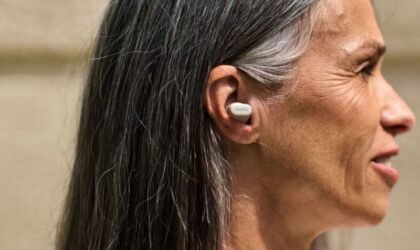
Cearvol Wave Lite
AI hearing aid
Cearvol rolls out Wave, Liberte, and Lyra for people with hearing loss. The NeuroFlow AI lineup puts speech first, cuts background noise, and offers forms that fit many lifestyles.
- Wave earbuds use four microphones and deliver up to 40 dB ± 5 dB of AI voice gain
- Lyra glasses take prescription lenses, so you skip a separate hearing aid each morning
- Liberte ear-clip earphones keep ears open, avoid ear canal plugs, and support awareness for safety
Smart tail light: LIVALL VP1

LIVALL is about to reveal an AI-powered smart tail light designed to make cycling safety smarter, not just reactive. The Fremont, California-based company already has a strong reputation with smart helmets, so it’ll be interesting to see how riders react to the new VP1 tail light. LIVALL hasn’t shared specs or features yet, but if you’re at CES, swing by booth #10723. I’ve reached out to the team for more information and will update the article once details arrive.
Smart glasses
CES 2026 will have plenty of smart glasses in the spotlight, the kind Meta made popular. Mark Zuckerberg’s team will be there, but most of the buzz will come from smaller brands like Xreal, Vuzix, Halliday Global, Rokid, and Even Realities.
And of course, we can’t forget the other social media giant. Snap might give a first look at their Specs. I’ve already asked Gadget Flow’s CES 2026 correspondents to check out their booth.
Snap Specs
Snap will show off the sixth-generation of its AI and AR glasses, Specs, for anyone who hasn’t seen them up close yet. I’m not sure if Snap will announce a price or release date at CES, but the company says the glasses will arrive sometime in 2026.
Specs can sense the world around you using smart machine learning, bring AI into 3D space, let you play games and share experiences with friends, and act as a flexible workspace for browsing, streaming, and other tasks.
Miscellaneous
Not every innovation at CES falls into wearables or robots. Some stand out for convenience and fun, like AI pet feeders, next-gen monitors, and gallery-style TVs.
PETKIT Yumshare Daily Feast
Last year, when I was abroad with my family, my cats and dog were alone at home, so I had to trustt our house keys to our neighbor who would enter home and feed them. Launching sometime in April 2026, the Petkit Yumshare Daily Feast is one of the first automatic dispensers that works with wet food. However what I like the most is that the machine can provide up to 7 days of meals and uses an NFC-based tracking system to automatically remove a serving if it hasn’t been consumed after 48 hours. That way I can travel with family more often without the worry of our pets’ food needs.
Gaming conitors: LG UltraGear evo
LG pulls back the curtain on a fresh wave of gaming monitors before CES. The UltraGear evo lineup aims at high end play, mixes multiple display tech paths, and locks in 5K screens with AI upscaling across the board.
LG Gallery TV

A few months after Samsung, TCL, and Hisense showed their art TVs, LG steps in with the LG Gallery TV.
Available in 55-inch and 65-inch sizes, the LG Gallery TV sports a slim, flush mount look with magnetic frames that users can swap to match a room. It packs ample internal memory so people can curate and store favorite pieces with ease.
Beyond wall art duty, the TV brings a premium watch and sound experience with MiniLED and the Alpha 7 AI Processor. You get crisp 4K visuals and AI Sound Pro with a Virtual 9.1.2ch audio stage.
Before you go
Smart stores and robotic arms make shopping feel like science fiction turned real. Gaming, TVs, and even pet feeders get an AI upgrade, showing that no part of everyday life stays untouched. The trends feel less about flashy demos and more about practical tools that can change routines. I keep thinking about which of these gadgets will stick around and which will fade after the show ends. For me, CES shows that AI is no longer just a headline—it’s quietly reshaping how we live.